Leave Your Message
The 2026 market for Tire Bolts is becoming more technical, competitive, and difficult to compare. Global buyers now examine more than price, production volume, and attractive catalogs. They want dependable tensile strength, accurate thread dimensions, corrosion resistance, and repeatable performance under heavy wheel loads. A bolt may look ordinary. Its failure is not.
Michael H. Rains, an independent wheel-fastener engineering consultant, often reminds buyers, “Clamping force matters more than appearance.” That practical warning deserves attention. Reliable Tire Bolts should match the required material grade, hardness range, coating system, thread profile, and torque specification. Manufacturers serving trucks, agricultural equipment, trailers, mining vehicles, and passenger applications may need different production controls. One design rarely fits every wheel-end condition.
This guide reviews leading Tire Bolts manufacturers for global buyers in 2026. It considers manufacturing experience, quality systems, testing capability, export readiness, customization, and documentation. Factory audits, sample inspections, and certificate verification still matter. Website claims alone are not enough. Some suppliers publish excellent specifications but provide limited evidence of batch traceability. Others offer strong engineering support but lack convenient regional distribution.
That is an imperfect reality.
Buyers should compare actual test reports, coating performance, packaging quality, and delivery consistency. Local climate also matters, especially where road salt, moisture, dust, or extreme temperature accelerate corrosion. The strongest supplier is not always the largest one. It is the manufacturer that can repeatedly deliver the right Tire Bolts, with clear evidence, stable quality, and responsive technical support.
2026 Top Tire Bolts Manufacturers for Global Buyers
What Are Tire Bolts and Why Do Global Buyers Need Them?
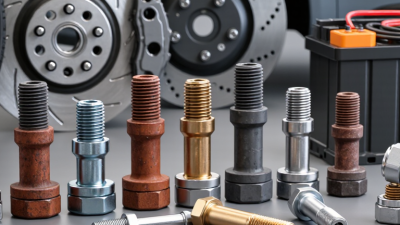
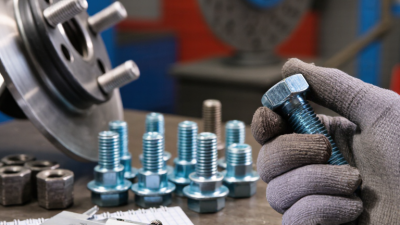
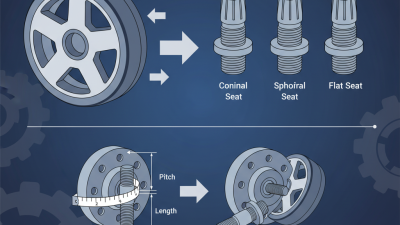
“Tire bolts” usually means wheel bolts. They fasten the wheel to the vehicle hub, not the rubber tire itself. This distinction matters during purchasing. A bolt with the wrong thread, seat shape, or length can cause poor clamping and wheel damage.
OICA recorded 93.5 million motor vehicles produced worldwide in 2023. Each vehicle requires correctly matched fastening hardware during assembly or service. The IEA also reported more than 17 million electric cars sold globally in 2024. Electric vehicles often place higher demands on wheel components because of greater vehicle mass and instant torque. Buyers should verify thread diameter, pitch, head design, strength class, coating, and specified tightening torque. ISO 898-1 provides widely used mechanical property classifications for carbon and alloy steel fasteners.
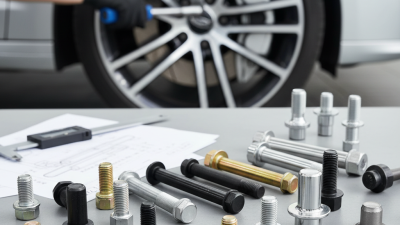
Fitment is the real purchasing test. A practical inspection compares the original bolt with technical drawings, thread gauges, and hub specifications. Suppliers should provide material certificates, dimensional inspection records, and batch traceability. Corrosion testing is also useful for vehicles exposed to road salt or coastal air. Packaging should prevent thread impact and moisture.
The word “tire bolt” remains imprecise. That can create avoidable sourcing errors. Product samples, torque guidance, and independent quality checks reduce this risk, although no certificate replaces correct vehicle application.
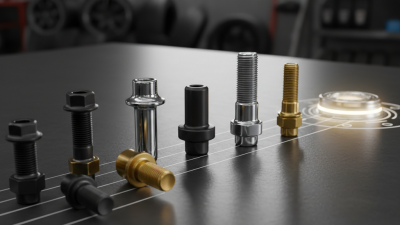
Tire bolts, commonly called wheel bolts, fasten a vehicle wheel to the wheel hub. The specifications below summarize commonly traded wheel-bolt configurations and the key data global buyers should verify before sourcing.
| Product Category | Common Application | Typical Thread Sizes | Common Thread Pitch | Typical Seat Type | Common Material / Strength | Typical Finish | Key Buyer Verification Data | Global Purchasing Relevance |
|---|---|---|---|---|---|---|---|---|
| Passenger-Car Wheel Bolts | Passenger cars using a wheel-bolt mounting system | M12 or M14 diameter; length must match the vehicle and wheel | 1.25 mm or 1.50 mm | Conical or ball-seat, depending on wheel design | Heat-treated alloy steel; commonly specified to ISO 898-1 property class 10.9 or an OEM-equivalent requirement | Zinc flake, zinc plating, or other corrosion-resistant coating | Thread diameter, pitch, under-head length, seat angle or radius, head size, and approved tightening torque | High-volume replacement and aftermarket category; incorrect seat geometry can prevent safe wheel clamping |
| Light-Commercial-Vehicle Wheel Bolts | Vans, utility vehicles, and light commercial vehicles | Frequently M12 or M14; length and load requirement vary by axle and wheel | 1.50 mm or vehicle-specific | Usually conical or ball-seat, according to the wheel specification | High-strength heat-treated steel; the required property class must be confirmed from the vehicle or component specification | Zinc-based coating, zinc flake, or black corrosion-resistant finish | Axle load, wheel thickness, engagement length, fatigue requirement, coating performance, and traceability | Buyers normally require stronger documentation because commercial vehicles experience frequent loading and higher mileage |
| Truck and Bus Wheel Fasteners | Heavy commercial vehicles with higher wheel loads | Metric sizes commonly include M18, M20, or larger; exact dimensions are application-specific | Vehicle-specific | May use a spherical, conical, flange, or specialized heavy-duty seat | Heat-treated alloy steel with controlled mechanical properties and fatigue performance | Corrosion-resistant coating selected for commercial-vehicle service conditions | Stud-or-bolt system, left/right-hand thread requirements where applicable, nut compatibility, clamping force, and service torque | Fleet buyers prioritize durability, consistent batch quality, inspection records, and replacement availability |
| Tapered-Seat Wheel Bolts | Wheels designed with a conical seating surface | Commonly M12 or M14 in passenger-vehicle applications | 1.25 mm or 1.50 mm | Typically 60-degree conical seat; the specified angle must be confirmed | Heat-treated steel, often manufactured to a specified automotive fastener grade | Zinc plating, zinc flake, or painted protective finish | Seat angle, contact diameter, shank length, thread engagement, and wheel-hole compatibility | Widely used in aftermarket programs, but a tapered bolt must not be substituted for a ball-seat bolt |
| Ball-Seat Wheel Bolts | Wheels designed with a rounded spherical seating surface | Commonly M12 or M14 in passenger-vehicle applications | 1.25 mm or 1.50 mm | Spherical or ball-seat profile, with the required radius defined by the wheel design | Heat-treated steel with controlled dimensional accuracy | Zinc-based or zinc-flake corrosion protection | Ball radius, seating width, under-head length, head profile, and compatibility with the wheel bore | Correct seat matching is essential because visual similarity does not confirm mechanical compatibility |
| Flange-Head Wheel Bolts | Applications requiring an integrated flange under the bolt head | M12, M14, M16, or application-specific sizes | Vehicle-specific | Integrated flange or application-defined contact surface | Heat-treated alloy steel; strength and fatigue requirements depend on the vehicle system | Zinc flake, zinc plating, or other tested protective finish | Flange diameter, flange thickness, bearing surface, head size, thread runout, and torque procedure | Useful for controlled assembly systems where the integrated bearing surface improves installation consistency |
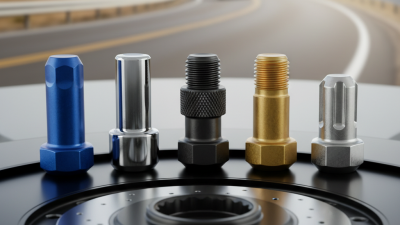
| Locking or Security Wheel Bolts | Passenger cars and light vehicles requiring wheel-theft deterrence | Usually based on the vehicle's standard M12 or M14 wheel-bolt thread | Vehicle-specific | Conical, ball, or other specified seat | Heat-treated steel with a corrosion-resistant exterior; locking mechanism requires dimensional control | Nickel, chrome, zinc-based, or other protective decorative finish | Key pattern control, seat profile, key replacement process, thread compatibility, and corrosion resistance | Global buyers should control key-code documentation and replacement logistics without compromising standard wheel fitment |
| Extended-Length Wheel Bolts | Wheels, spacers, or brake-conversion assemblies requiring additional thread length | Often M12 or M14, with length determined by the complete wheel assembly | 1.25 mm or 1.50 mm | Conical, ball, or flange seat according to the wheel | Heat-treated alloy steel with verified tensile and fatigue performance | Zinc flake or other corrosion-resistant coating | Effective thread engagement, free-thread length, spacer thickness, wheel-hole depth, and risk of bottoming out | Length must be calculated from the complete assembly; excessive length can interfere with hub or brake components |
| Automotive Replacement Wheel Bolts | Service and replacement channels for original vehicle fitments | Determined by the original application; M12 and M14 are common passenger-car diameters | Match original specification | Must duplicate the original conical, ball, flange, or specialized seat | Material grade, heat treatment, and mechanical properties should be documented by batch | Coating should be selected for the required corrosion test and service environment | Vehicle fitment list, drawings, inspection plan, batch traceability, packaging, and sampling requirements | Suitable for international distribution when fitment data, labeling, and technical documentation are consistent |
Buyer note: Wheel-bolt torque, thread engagement, seat geometry, and material requirements are vehicle-specific. Always follow the vehicle, wheel, or component manufacturer's approved specification; do not select a bolt by thread size alone.