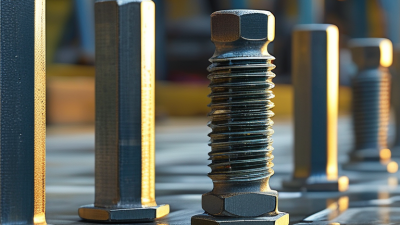
Choosing the right Center Bolt Leaf Spring manufacturer affects ride stability, load control, service life, and maintenance costs. This guide examines ten notable manufacturers serving commercial vehicles, trailers, agricultural equipment, and off-road applications. It focuses on production experience, material quality, engineering support, and consistency between samples and delivered batches.
A reliable manufacturer should understand spring steel selection, heat treatment, shot peening, surface protection, and precise center-bolt assembly. These details matter when a truck carries uneven loads across rough roads. We also consider manufacturing capacity, testing procedures, customization options, delivery reliability, and customer support. Certifications can help, but they do not replace practical inspection. Ask for dimensional reports, fatigue-test data, traceability records, and clear warranty terms.
Real-world performance tells more.
The list is not a universal verdict. A large supplier may offer strong capacity but limited flexibility for smaller orders. A specialized factory may provide better communication yet face longer lead times. Pricing can also hide differences in steel grade, testing depth, packaging, and after-sales service. These variables deserve careful comparison.
Our review uses publicly available company information, industry practices, product evidence, and practical purchasing considerations. Some manufacturers may change facilities, product ranges, or regional support over time. That limitation should be acknowledged. Buyers should confirm current specifications directly before placing an order. The best choice depends on axle design, vehicle weight, operating conditions, expected mileage, and local service requirements. A spring that performs well on paved highways may disappoint in mines, farms, or construction yards. Careful evaluation remains essential.
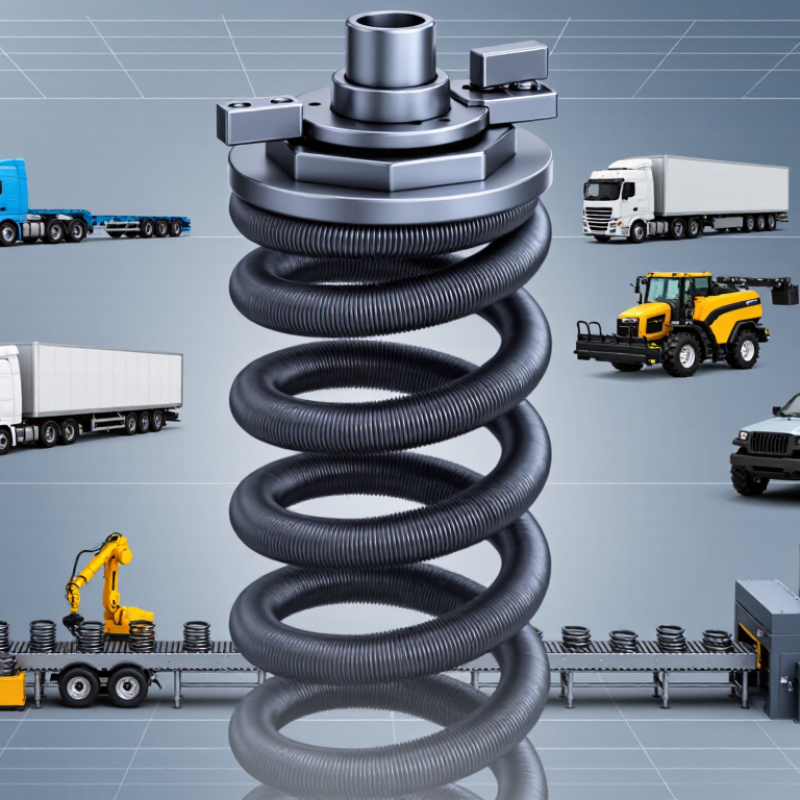
Defining Center Bolt Leaf Springs and Their Applications
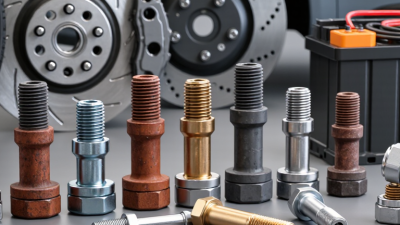
A center bolt leaf spring is a stacked, curved steel suspension member. Its central bolt clamps the leaves together and locates the axle assembly. The bolt head usually fits into a locating hole or seat on the axle pad. This detail controls axle position under braking, acceleration, and uneven loading.
These springs appear in pickup trucks, trailers, utility vehicles, and medium-duty platforms. Their simple structure supports heavy loads while remaining easy to inspect and replace. A practical inspection checks cracked leaves, shifted clamps, worn bushings, and a damaged bolt head. The center bolt is small, but critical. If it loosens, axle alignment can change and tire wear may become uneven. The application decides the design. A trailer may prioritize payload stability, while a work truck needs better ride control and fatigue resistance.
Weight still matters. The U.S. Department of Energy’s Vehicle Technologies Office reports that a 10% vehicle weight reduction can improve fuel economy by about 6–8%. Engineers therefore balance spring thickness, material strength, and durability instead of simply adding steel. SAE fatigue-testing literature also emphasizes repeated-load evaluation, not only static capacity. That distinction is often missed. A spring can carry a heavy load once and still fail prematurely after thousands of road impacts. Selecting among the top center bolt leaf spring manufacturers should involve load data, fatigue evidence, dimensional accuracy, and service conditions. Supplier reputation alone is not enough.
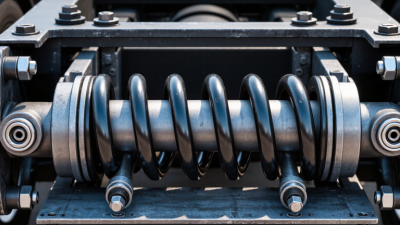
A center bolt leaf spring is a stacked spring assembly clamped by a bolt through the center of the leaves. The bolt locates the spring pack on the axle seat, while its nominal diameter is commonly selected according to vehicle load and suspension duty.
The chart shows representative nominal center-bolt diameters commonly used across major application groups: 1/2 in (12.7 mm), 5/8 in (15.9 mm), 3/4 in (19.1 mm), and 7/8 in (22.2 mm). Actual specifications vary by axle load, leaf count, spring width, bolt grade, and vehicle design; these values are technical reference points rather than manufacturer-specific ratings.
A credible ranking should measure engineering evidence, not catalogue size. Grand View Research’s automotive leaf spring market analysis projects steady growth through 2030, driven by commercial vehicle demand. That growth makes supplier screening more important. Evaluate steel grade certificates, heat-treatment records, and shot-peening controls. These details affect fatigue life under repeated axle movement. Ask for test data using recognized SAE procedures, including load-deflection and endurance testing.
Center Bolt Accuracy Center bolt accuracy deserves special attention. A bolt hole that shifts only a few millimeters can disturb axle alignment and increase bushing wear. Inspect drawing tolerances, hole-position reports, and sample assemblies. A serious manufacturer should provide measured arch height, spring rate, free camber, and hardness results. Independent laboratory verification strengthens reliability. In practice, I would request at least three production samples, not one polished prototype.
Quality systems also separate strong candidates from ordinary suppliers. ISO 9001 certification helps, but it cannot replace process evidence. Check corrective-action records, lot traceability, incoming steel inspection, and warranty-return analysis. The Automotive Aftermarket Suppliers Association reports continuing pressure for shorter lead times and stronger supply-chain visibility. Therefore, delivery performance belongs in the ranking. Review on-time delivery rates, packaging protection, and emergency replacement capacity. One weakness remains: public reports rarely reveal true fatigue-failure rates. Buyers should score transparency, while admitting that factory audits may still miss seasonal production variation.
Top 10 Center Bolt Leaf Spring Manufacturers? Manufacturer Profiles and Product Specializations
A strong manufacturer profile should explain more than production capacity. It should show material choices, forming methods, testing routines, and support after delivery. The leading ten suppliers usually specialize in different areas. Some focus on light commercial vehicles. Others produce heavy-duty springs for trucks, trailers, agricultural equipment, or off-road fleets. Several offer standard replacement springs, while others design custom assemblies with center bolts, clips, bushings, and mounting plates. Their product expertise may include multi-leaf packs, parabolic springs, tapered leaves, or reinforced overload springs.
From my experience reviewing suspension components, consistent steel quality matters greatly. Heat treatment, shot peening, and accurate camber control affect service life. A dependable manufacturer should provide dimensional records and load testing data. Clear drawings also reduce installation errors. However, catalogs can hide important limitations. A spring rated for one axle setup may perform poorly on another. I have seen specifications that looked impressive but lacked real vehicle testing. That deserves careful review.
Tips: Compare load ratings, leaf thickness, eye dimensions, and center-bolt size. Ask for fatigue-test evidence and corrosion protection details. Confirm packaging prevents bending during transport. Check whether replacement parts are available. Do not judge quality by price alone. A small measurement mistake can create noise, uneven ride height, or premature failure. Manufacturer profiles should be practical, transparent, and specific enough for engineers and fleet buyers.
| Rank | Anonymized Manufacturer Profile | Primary Production Region | Core Product Specialization | Typical Center-Bolt Leaf-Spring Formats | Material and Heat-Treatment Capabilities | Main Vehicle Applications | Quality and Engineering Focus |
|---|---|---|---|---|---|---|---|
| 1 | Profile A — Heavy-Duty Spring Specialist | North America | Heavy-truck and trailer suspension springs | Multi-leaf packs, tapered leaves, auxiliary springs, center-bolt assemblies | High-carbon spring steel, quenching and tempering, shot peening, presetting | Class 7–8 trucks, trailers, vocational vehicles | High-load fatigue performance, replacement interchangeability, dimensional inspection |
| 2 | Profile B — Commercial Vehicle OE Supplier | Western Europe | Original-equipment suspension components | Parabolic springs, conventional multi-leaf packs, clipped assemblies | Alloy spring steel, controlled furnace processing, surface protection, shot peening | Light commercial vehicles, buses, medium-duty trucks | Finite-element development, corrosion control, fatigue and load testing |
| 3 | Profile C — High-Volume Chassis Component Producer | East Asia | Mass-production leaf springs for domestic and export markets | Standard multi-leaf packs, center-bolt kits, U-bolt-compatible assemblies | Silicon-manganese spring steel, automated forming, heat treatment, presetting | Pickup trucks, buses, trucks, agricultural vehicles | High-volume consistency, automated dimensional checks, export packaging |
| 4 | Profile D — Aftermarket Replacement Manufacturer | North America | Replacement suspension parts and service assemblies | OEM-equivalent packs, single replacement leaves, center bolts and clips | Heat-treated spring steel, shot peening, protective coatings, presetting | Fleet trucks, utility vehicles, trailers, recreational vehicles | Part-number coverage, fitment control, load-rated replacement designs |
| 5 | Profile E — Heavy Transport Suspension Producer | Central Europe | Trailer, axle and heavy-transport spring systems | Tapered multi-leaf springs, trailer springs, center-bolt secured packs | Alloy spring steel, controlled rolling, heat treatment, anti-corrosion finishing | Semitrailers, heavy trailers, agricultural and industrial transport equipment | High axle-load durability, traceability, fatigue validation and corrosion resistance |
| 6 | Profile F — Utility and Off-Road Spring Manufacturer | Oceania | Off-road, utility and recreational vehicle suspension | Heavy-duty multi-leaf packs, raised-load designs, center-bolt assemblies | Spring steel heat treatment, shot peening, load testing, surface protection | Four-wheel-drive vehicles, utility fleets, caravans and trailers | Variable-load tuning, articulation, ride-height control and field durability |
| 7 | Profile G — Asian Commercial Vehicle Supplier | South Asia | Commercial vehicle and industrial spring assemblies | Conventional multi-leaf packs, graduated leaves, center-bolt repair kits | High-strength spring steel, hot forming, quench-and-temper processing, presetting | Buses, light trucks, medium-duty trucks and industrial vehicles | Cost-efficient production, fleet replacement coverage, load and hardness checks |
| 8 | Profile H — Precision Small-Series Manufacturer | Northern Europe | Low-volume and application-specific spring solutions | Custom multi-leaf packs, prototype springs, center-bolt assemblies | Certified spring steel, controlled heat treatment, shot peening, custom finishing | Special-purpose trucks, restoration projects, industrial equipment | CAD-based customization, prototype validation, material traceability and inspection |
| 9 | Profile I — Agricultural and Industrial Spring Producer | Latin America | Agricultural, commercial and industrial suspension parts | Heavy multi-leaf packs, tractor-trailer springs, center-bolt secured assemblies | Carbon and alloy spring steel, hot forming, heat treatment, corrosion protection | Agricultural machinery, trucks, trailers and industrial transport units | High static-load capacity, rugged operating conditions, replacement compatibility |
| 10 | Profile J — Integrated Suspension Component Supplier | Southeast Asia | Leaf springs, mounting hardware and assembled suspension kits | Multi-leaf packs, parabolic configurations, center bolts, clips and bushings | Spring steel processing, heat treatment, shot peening, coating and assembly | Passenger utility vehicles, light commercial vehicles, trucks and trailers | One-stop sourcing, assembly accuracy, packaging control and export readiness |
Top 10 Center Bolt Leaf Spring Manufacturers: Comparing Materials, Designs, Quality, and Production Capabilities
Choosing a center bolt leaf spring manufacturer requires more than comparing prices. Material selection controls fatigue life, load capacity, and resistance to permanent sag. Common choices include silicon-manganese spring steel and chromium-vanadium steel. The World Steel Association’s World Steel in Figures 2024 reports global crude steel production at about 1.89 billion tonnes in 2023. This scale supports broad material access, but it does not guarantee consistent spring quality.
Look for controlled hot forming, accurate center-hole punching, and uniform heat treatment. Shot peening can improve surface fatigue resistance, while presetting reduces early settling under load. Strong manufacturers document hardness, camber, tensile strength, and fatigue testing for each production batch. Their inspection systems should follow recognized automotive quality practices, such as IATF 16949 principles and AIAG CQI-9 heat-treatment guidance. Small details matter. A bolt hole shifted by a few millimeters can create uneven axle seating.
Production capacity also deserves careful testing. Automated furnaces may improve repeatability, yet skilled technicians still matter during tooling changes and first-article inspection. Ask for traceability from steel coil to finished spring. Request sample fatigue records, not only certificates. One weakness remains: published test data may reflect ideal laboratory conditions, rather than muddy roads, overloads, or cold weather. A factory with excellent equipment can still produce inconsistent batches if process discipline slips. Physical samples should confirm the paperwork.
When comparing the Top 10 Center Bolt Leaf Spring Manufacturers, supplier selection matters more than a polished ranking. A suitable supplier should provide spring steel grades, load ratings, fatigue data, and dimensional drawings. In workshop inspections, small differences in bolt length or eye diameter can create difficult installation problems. Ask for production samples, traceable inspection records, and clear tolerances before approving a purchase. Reliability starts with evidence, not confident promises.
Check whether the supplier understands your axle weight, suspension geometry, road conditions, and expected service life. A center bolt must align the spring pack securely without crushing leaves or disturbing clamping plates.
Experienced manufacturers should explain heat treatment, shot peening, forming accuracy, and corrosion protection in practical terms. Request fatigue-test methods, batch consistency data, and replacement support. One overlooked detail is packaging; bent leaves can arrive after a perfect factory inspection.
Tips: Compare at least three technical quotations, not only unit prices. Confirm samples against your vehicle drawings and measure bolt head seating. Ask how failed parts are investigated and reported. Clarify lead times, minimum order quantities, warranty limits, and communication during design changes. I would also inspect one delivered batch personally. That step takes time, but skipping it has caused avoidable rework. No supplier is flawless; the best partner admits uncertainty and documents corrective action.