Leave Your Message

How to Choose Galvanized Square Bolts in 2026?

Choosing Galvanized Square Bolts in 2026 requires more than comparing prices or surface appearance. These fasteners support gates, timber frames, agricultural equipment, outdoor furniture, and structural connections exposed to moisture. A suitable bolt must match the load, material, installation method, and expected environment. Small details matter.

Experienced buyers usually examine steel grade, bolt diameter, thread quality, square-neck dimensions, coating consistency, and washer compatibility. Hot-dip galvanizing can provide strong corrosion resistance, but coating thickness may vary between suppliers and production batches. Check documented specifications, inspection records, and recognized testing references before purchasing. A bright finish alone proves very little. It may look excellent.

The surrounding materials deserve equal attention. Galvanized steel can react differently when placed against certain metals, treated timber, saltwater, or industrial chemicals. Consider drainage, trapped moisture, tightening access, and future maintenance. A square neck should seat firmly without crushing softer wood or deforming thin metal. In practice, selecting a slightly stronger bolt is not always the best answer; excessive tightening can damage the connection. This is where judgment becomes important.

Reliable suppliers should provide traceable product information, clear dimensions, coating details, and consistent packaging. Compare samples when the project carries serious loads. Test fitting can reveal thread damage, loose square shoulders, or poorly formed heads before installation. I have found that catalog descriptions sometimes omit practical limitations, so independent verification remains valuable. No selection method is perfect. Conditions change, and field results may challenge assumptions. Use engineering guidance for critical applications, document your reasoning, and choose Galvanized Square Bolts based on evidence rather than appearance alone.

How to Choose Galvanized Square Bolts in 2026?

Understanding Galvanized Square Bolts and Their Main Applications

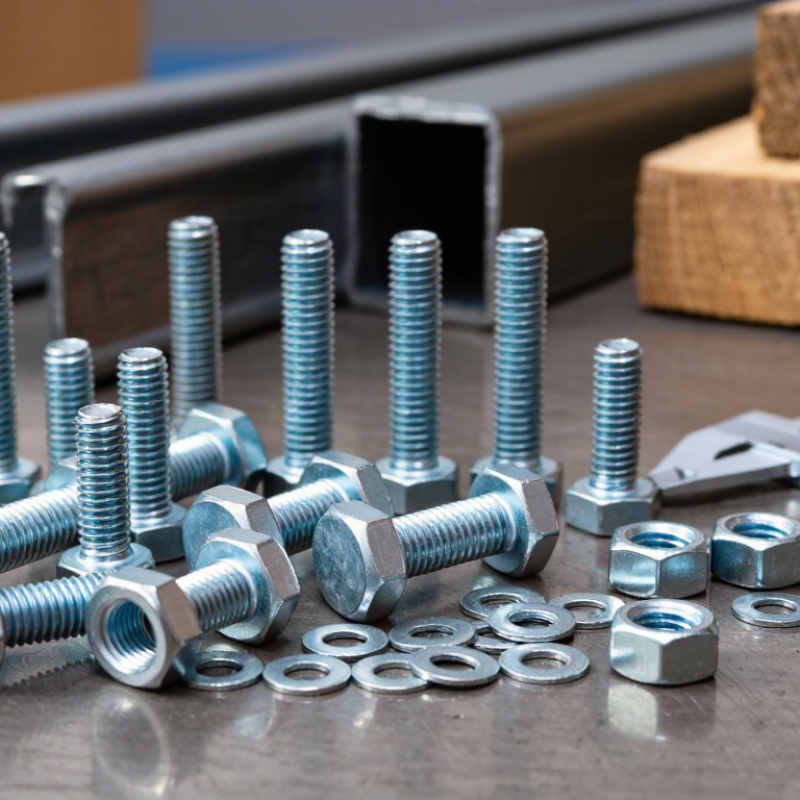
Galvanized square bolts combine a square bearing head with a zinc-protected steel body. The head resists turning inside timber, slotted steel, or a prepared square hole. This matters when one worker tightens the nut from the opposite side. The zinc layer also delays rust in rain, condensation, and outdoor storage. Hot-dip galvanizing usually provides a thicker coating than electro-galvanizing. It may look rougher. That is normal.

Applications include timber framing, agricultural gates, fencing, utility supports, trailers, and light structural connections. A common field mistake is choosing by diameter alone. Check bolt length, thread engagement, steel grade, washer size, and the mating material.

Soft wood can crush under the square shoulder. Thin sheet can distort around the hole. ASTM F2329/F2329M covers hot-dip galvanized coatings for carbon and alloy steel fasteners, while ASTM A153/A153M addresses galvanized hardware coatings. These references help buyers compare real specifications.

Market data also explains why coating quality deserves attention. The USGS Mineral Commodity Summaries 2024 reported global zinc mine production near 12 million metric tons in 2023. The World Steel Association reported approximately 1.89 billion metric tons of crude steel production in 2023. These figures show the scale of the supply chain, not guaranteed bolt quality. In 2026, request coating thickness, mechanical-property documentation, and dimensional tolerances. Inspect the square head and threads before installation. Small defects can become expensive. The “best” bolt still depends on exposure, load, and installation control. Even experienced buyers sometimes overlook washer compatibility.

Identifying the Right Bolt Size, Grade, and Thread Specifications

How to Choose Galvanized Square Bolts in 2026?

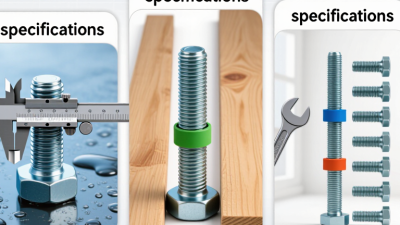
Selecting a galvanized square bolt starts with the load, not the price. Measure the joint thickness, hole diameter, and required clamping force. A 2025 USGS report estimated global zinc mine production at about 12 million metric tons in 2024. That supply supports galvanizing, but it does not guarantee coating quality.

For metric projects, ISO 898-1 grades such as 4.6 or 8.8 indicate mechanical strength. Do not compare these numbers directly with inch-based grades. ASTM A307 Grade A is common for general fastening, while stronger applications may require a specified structural grade. Check the bolt marking and certificate. A catalog photo is not enough.

Thread choice matters as much as diameter. ASME B1.1 defines Unified threads, while ISO metric threads use pitch in millimeters. Coating thickness can tighten the fit. ASTM F2329 provides requirements for hot-dip galvanized coatings on carbon steel bolts. Use compatible galvanized nuts, or specify oversize tapping where the standard permits it. Fine threads offer adjustment, but coarse threads usually tolerate dirt better. I still measure twice. A one-millimeter mistake can stop assembly. Inspect for bare steel, damaged corners, uneven coating, and incomplete threads before installation. Some selections remain judgment calls, especially when vibration, outdoor exposure, and limited maintenance overlap.

Comparing Zinc Coatings and Corrosion Resistance for 2026

How to Choose Galvanized Square Bolts in 2026?

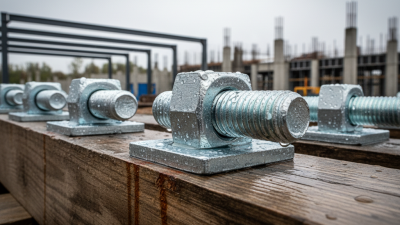
Choosing galvanized square bolts in 2026 requires more than checking a bright, smooth surface. Zinc protects steel by corroding first, but coating thickness controls how long that protection lasts. Electroplated zinc often measures about 5–15 micrometers and suits dry indoor assemblies. Hot-dip galvanized coatings are usually much thicker, often 40–100 micrometers. They provide stronger protection outdoors, but their rough texture can affect thread fit.

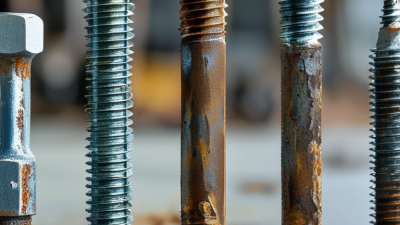
Corrosion resistance also depends on moisture, salt, temperature, and damaged areas. A bolt used near coastal air needs more protection than one inside a dry workshop. White rust may appear after trapped moisture contacts fresh zinc. It looks alarming, but red rust on exposed steel is the more serious warning.

Ask for coating-thickness records, adhesion results, and the actual corrosion test method. Salt-spray hours help comparison, yet they do not perfectly predict field life.

I once judged bolts by appearance alone. That was a poor shortcut. Inspect the square shoulder, threads, and head edges closely. Thin spots often appear there. Excessive coating can prevent smooth nut engagement or change torque behavior.

Use a calibrated wrench and follow the supplier’s torque guidance. For outdoor structures, verify batch traceability and independent inspection records. A cheaper coating may work indoors, but that assumption deserves another look when rain, road salt, or condensation is involved.

Checking Compatibility with Materials, Tools, and Installation Conditions

How to Choose Galvanized Square Bolts in 2026?

Checking compatibility starts with the materials being joined. Galvanized square bolts suit treated timber, painted steel, and many outdoor frames. Their zinc coating helps resist moisture, but it is not a permanent shield. Avoid direct contact with bare aluminum unless an approved isolating washer or coating separates the metals. Contact between dissimilar metals can accelerate corrosion, especially near saltwater or trapped moisture.

Check the bolt size against the hole, washer, and tool before installation. The square shoulder must fit tightly into the material, not spin inside an oversized hole. A flat washer spreads pressure across soft wood. Use a socket or wrench that fully grips the nut. A torque wrench provides better control than tightening by feel. I once treated “snug” as precise; it was not. Over-tightening can crush timber, damage threads, or scrape away protective zinc.

Installation conditions also matter. Keep the joint clean and dry, and remove packing dust from the threads. Do not force a nut onto damaged or mismatched threads. In cold weather, timber may contract later, so inspect the joint after installation. Cut or scratched coating should receive suitable corrosion protection. Check the exposed end, washer edges, and underside of the square shoulder. These small areas often collect water first.

Evaluating Quality, Standards, Suppliers, and Long-Term Value

How to Choose Galvanized Square Bolts in 2026?

Selecting galvanized square bolts requires more than comparing prices. Check the bolt grade, dimensions, thread accuracy, and zinc coating thickness. A clean, even surface usually indicates careful processing, but appearance alone proves little. Ask for material certificates, coating test results, and batch traceability. Standards such as ASTM, ISO, or equivalent national requirements can clarify performance expectations. Always confirm which standard applies to your project.

In practical inspections, I look for damaged threads, bare spots, sharp zinc buildup, and inconsistent head shapes. These small defects can complicate installation or reduce corrosion protection. Supplier reliability matters just as much. Review production experience, inspection procedures, packaging quality, and replacement policies. A supplier who answers technical questions clearly is generally safer than one offering only the lowest quotation. Still, my own checklist is not perfect; field conditions may expose risks that documents miss.

Tips: Match the bolt size to the connected materials and expected load. Avoid mixing incompatible coatings without checking corrosion risks. Request samples before ordering large quantities. Consider the full service life, not only the purchase price. In outdoor or humid environments, slightly higher coating quality may prevent repeated maintenance. Keep installation records, including torque observations and batch numbers. This evidence helps when performance becomes uncertain later.

How to Choose Galvanized Square Bolts in 2026? - Evaluating Quality, Standards, Suppliers, and Long-Term Value

Evaluation Dimension Recommended Benchmark Relevant Standard or Test Method What to Check Before Purchase Long-Term Value Impact
Bolt configuration Confirm square-head dimensions, shank diameter, thread length, pitch, and overall length against the drawing. Applicable dimensional requirements may include ASME B18.2.1 for inch fasteners or ISO 4018 for hexagon-head products where applicable. Square-head dimensions should be specified on the purchase drawing. Check across-head width, head height, diameter, thread runout, and whether the square head provides sufficient bearing area for the joint. Correct geometry reduces installation problems, rework, washer damage, and joint loosening caused by poor fit.
Base material Use carbon or alloy steel with a declared chemical composition and mechanical-property grade suitable for the joint load. ASTM A307 may be used for applicable general-purpose carbon-steel bolts. ISO 898-1 defines mechanical properties for many metric carbon- and alloy-steel bolts. Request the material grade, heat-treatment condition where relevant, heat number, and a material or inspection certificate. Traceable steel reduces the risk of premature tensile failure and helps match the bolt to the required safety factor.
Galvanizing process Select hot-dip galvanizing for thicker zinc protection and demanding outdoor exposure; select electroplated zinc for controlled indoor or mildly corrosive conditions. ASTM F2329/F2329M and ASTM A153/A153M cover hot-dip zinc coatings for applicable steel fasteners and hardware. ASTM F1941/F1941M covers electrodeposited coatings on fasteners. The quotation should state the coating process rather than using only the term “galvanized.” Check whether the coating is applied before or after thread formation. The correct coating process can extend service life and reduce replacement frequency, especially in wet or industrial environments.
Zinc coating thickness Use the minimum average and local coating thickness required by the selected standard and fastener diameter; do not accept an unspecified zinc thickness. Coating requirements are defined by ASTM F2329/F2329M, ASTM A153/A153M, or ASTM F1941/F1941M, depending on the process. Review coating-thickness measurements taken at representative locations. Magnetic thickness testing can follow ASTM E376 or ISO 2178 when suitable for the product. Adequate zinc thickness provides a larger corrosion-resistance margin and lowers lifecycle maintenance cost.
Coating appearance and coverage The coating should be continuous and firmly bonded, without bare areas, blistering, flaking, sharp zinc protrusions, or blocked threads. ASTM A123/A123M and ASTM A780/A780M provide useful hot-dip galvanizing inspection and repair principles; the purchase specification should identify the applicable fastener standard. Inspect head edges, shank, thread roots, thread crests, and recessed areas. A gray or spangled appearance alone does not prove coating quality. Uniform coverage prevents localized corrosion cells and reduces the chance of early rust at exposed or damaged areas.
Thread compatibility Use nuts specifically compatible with the selected galvanized bolt coating and thread allowance. Do not force a tight or damaged nut onto the bolt. ASTM A563/A563M includes requirements for nuts used with hot-dip and mechanically deposited zinc-coated fasteners. Applicable metric nut requirements may be specified under ISO 898-2. Check free-running assembly with the supplied nut, thread gauge, and installation lubricant or wax where required. Verify that coating buildup has not reduced thread clearance. Good thread compatibility prevents galling, installation delays, thread stripping, and unusable fasteners in the field.
Mechanical strength Specify proof load, tensile strength, yield or proof stress, and hardness where the application requires controlled joint performance. ISO 898-1 applies to many metric bolts; ASTM A307 and other applicable ASTM fastener specifications may be used for inch-series products. Request test results or certificates for tensile testing, proof-load testing, hardness, and dimensional inspection from the production lot. Adequate strength prevents joint failure and allows engineers to calculate preload and safety margins reliably.
Hydrogen embrittlement risk Pay particular attention to high-strength fasteners that receive acid cleaning or electroplating; require a documented control process where applicable. ISO 4042 addresses electroplated coating systems for fasteners and related hydrogen-embrittlement controls. Applicable product standards should also be reviewed. Confirm cleaning, plating, baking, inspection, and lot-traceability procedures for high-strength products. Do not use a generic coating statement as evidence of control. Proper control reduces the risk of delayed brittle fracture, which can create severe safety and replacement costs.
Corrosion environment Classify the exposure as indoor dry, outdoor rural, urban, coastal, wet-process, or industrial before selecting the coating system. ISO 9223 provides atmospheric corrosivity categories. ISO 12944 can support broader corrosion-protection planning for steel structures. Record humidity, salt exposure, chemicals, temperature, drainage, contact with dissimilar metals, and the possibility of water entrapment. Environment-based selection avoids both premature corrosion and unnecessary over-specification.
Installation and torque Use an installation procedure that specifies lubrication, tightening method, target preload where applicable, and inspection frequency. Torque values should come from a validated joint procedure because coating, lubricant, nut condition, thread fit, and surface finish change the torque-tension relationship. Perform a sample torque-tension verification for critical joints instead of relying on a universal torque table. Avoid mixing incompatible lubricants or nuts. Controlled installation improves clamp load consistency and reduces loosening, fatigue, and field service work.
Inspection and traceability Each delivery should be identifiable by size, grade, coating specification, production lot, and inspection status. Use the quality-documentation requirements stated in the purchase order and the selected ASTM, ISO, or national product standard. Require a certificate of conformity, dimensional report, coating report, mechanical test report where applicable, and clear lot marking on packaging. Traceability simplifies audits, recalls, root-cause analysis, and repeat purchasing of consistent product.
Supplier evaluation Choose a supplier able to provide stable specifications, lot control, inspection records, and consistent delivery rather than evaluating price alone. ISO 9001 certification can indicate a documented quality-management system, but it does not by itself prove that every bolt meets the required product standard. Audit sample reports, calibration records, nonconformance procedures, packaging controls, and the supplier’s ability to answer technical questions. Reliable quality and delivery reduce incoming inspection, downtime, emergency freight, and total procurement cost.
Total cost of ownership Compare purchase price with coating performance, installation time, inspection effort, replacement frequency, downtime, and disposal cost. Use the applicable product, coating, and corrosion-class standards as the technical baseline; service-life estimates must be project-specific. Calculate delivered cost per installed joint, including compatible nuts and washers, labor, maintenance access, expected replacement, and warranty exposure. A slightly higher compliant purchase price may provide lower lifetime cost when it improves corrosion resistance, fit, traceability, and installation reliability.

Note: Standard editions and project-specific engineering requirements should be verified before procurement. Corrosion life cannot be determined from zinc coating alone because exposure, joint design, drainage, installation, and maintenance also affect performance.