What Are the Top Types of King Pin Shim Kits?
Kingpin shims are thin, precise parts, but their fit can affect steering geometry and wear. A King Pin Shim Kit may include flat, tapered, or graduated shims, depending on the axle design and adjustment method. The names are not always used consistently across suppliers. Fit matters.
The stakes are practical. NHTSA’s 2022 Traffic Safety Facts report recorded 5,837 large trucks involved in fatal crashes in the United States. That figure does not identify shim failures or prove that shims caused crashes. It does underline why steering and suspension components deserve careful maintenance. A shim selection guide should rely on axle specifications, measured clearances, and manufacturer instructions—not appearance alone.
This article compares common kit types by shape, thickness range, material, and intended fitment. Flat steel shims suit straightforward spacing needs, while tapered styles can support angle adjustment where the assembly allows it. Multi-thickness assortments offer flexibility, but extra options do not guarantee a correct repair. Not just thickness. The right kit must match the kingpin, axle, and service procedure. We will also consider corrosion protection, dimensional consistency, and what to verify before ordering. These details can be easy to overlook, especially when a kit looks nearly identical to another. That is a useful point to question: “universal” may mean convenient, not universally compatible.
King Pin Shim Kits: Purpose and Basic Components
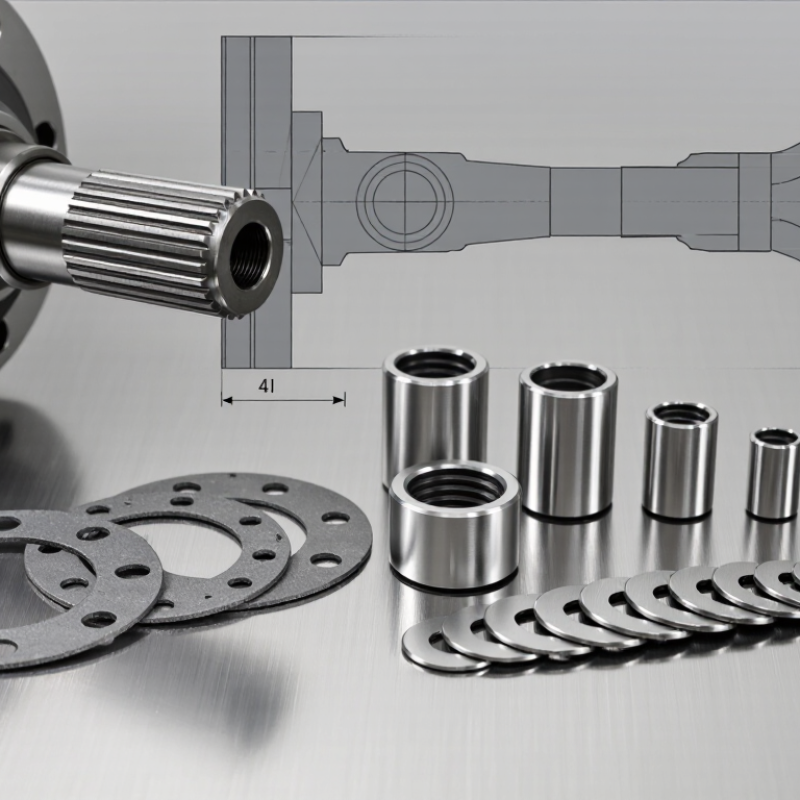
King pin shim kits control vertical clearance between the steering knuckle and axle. Correct clearance helps the knuckle pivot smoothly without excessive movement. Too much play can accelerate wear; too little may cause binding. A kit commonly contains thin, calibrated metal shims, often supplied in several thicknesses. Some kits also include replacement fasteners or seals, depending on the axle design. Fit and contents vary.
The shims sit at the knuckle’s upper or lower bearing surfaces. A technician measures movement with a dial indicator, then selects shims to meet the axle maker’s service specification. Guessing from an old shim stack is tempting, but wear may have changed the measurement. CVSA’s 2023 International Roadcheck reported that 20.7% of inspected commercial vehicles were placed out of service. That figure covers all vehicle inspection issues, not king pin defects specifically; it reinforces the value of careful maintenance, not a claim about shim kits.
Tips: Clean the mating surfaces before measuring. Check the axle service manual for the specified clearance and shim arrangement. Replace damaged shims, and verify free steering movement after assembly. A kit cannot correct a worn king pin or damaged bearing. Small detail, big consequence. Even a careful measurement deserves a second check.
King Pin Shim Kits: Example Shim Thicknesses
Shim kits use thin metal shims to adjust kingpin end play. The chart shows example shim-stock thicknesses and their inch-to-millimeter conversions—not a universal kit specification. Always follow the vehicle manufacturer’s service information.
Basic components: A kit generally contains metal adjustment shims in selected thicknesses. Shims are installed at the kingpin assembly’s specified adjustment point; the exact assortment and installation method vary by application.
Common Types by Material and Shim Design
King pin shim kits differ by material and by how each shim fits around the pin. Plated carbon-steel shims are common in robust assemblies and offer a practical, economical option. Stainless-steel shims better resist moisture and surface corrosion, especially where road spray reaches the steering joint. ASTM A240 covers chromium and chromium-nickel stainless sheet and strip, materials used in precision-cut parts. Material data in the ASM Handbook puts 304 stainless thermal expansion near 17.3 micrometers per meter per degree Celsius from 0 to 100°C. That is higher than typical carbon steel. The difference rarely decides a kit alone, but it matters in tightly controlled assemblies.
Design matters just as much. Full-ring shims provide continuous support, while slotted or open-sided shims can fit around a pin without removing nearby parts. Thin, individually stacked shims allow fine adjustment; laminated peelable designs offer adjustment by removing layers. Check the kit’s thickness increments, inner diameter, and outer profile against the application. A shim that fits the pin but overlaps a moving surface can wear or shift. Small details matter. Corrosion resistance is not the same as correct fit, and material labels alone do not confirm suitability. When records are incomplete, measuring the existing stack is useful—but it can preserve an earlier mistake.
What Are the Top Types of King Pin Shim Kits? - Common Types by Material and Shim Design
| Type |
Material or Design |
Key Characteristics |
Typical Use and Considerations |
| Standard steel shim kit |
Flat shims made from carbon steel, supplied in multiple thicknesses |
Rigid, durable construction; different thicknesses allow small adjustments to end play or component spacing. |
A common choice for service and repair. Confirm the required dimensions and thickness range for the specific axle or steering assembly. |
| Stainless steel shim kit |
Flat shims made from stainless steel |
Offers greater resistance to corrosion than ordinary carbon steel in suitable service conditions. |
May be considered where moisture or corrosion is a concern. Material suitability and fit should be checked against the application requirements. |
| Brass shim kit |
Thin, flat brass shims in assorted thicknesses |
Brass is workable and corrosion-resistant, but is generally softer than steel. |
Used only where the assembly specification allows brass. Check load, wear, and temperature requirements before selecting this material. |
| Plastic or polymer shim kit |
Non-metallic shims, commonly made from an engineering polymer |
Can provide a low-friction or non-metallic spacing surface; material properties vary by polymer. |
Suitable only for applications designed to accept a polymer shim. Verify load capacity, temperature limits, and chemical compatibility. |
| Full-ring shim kit |
Closed circular or annular shims with a central opening |
Surrounds the pin or fastener evenly and provides support around the full circumference. |
Useful when the assembly can be dismantled enough to install a closed shim. Match the inner and outer diameters to the mating parts. |
| Split or C-shaped shim kit |
Open-sided shims with a slot extending to the outer edge |
Can be fitted around a shaft or pin without passing the shim over its end. |
Helpful where access is limited and the design permits side installation. Confirm that the opening and profile are compatible with the assembly. |
| Assorted-thickness shim kit |
A selection of individual shims in graduated thicknesses, often with a consistent profile |
Allows adjustment by selecting one shim or a specified combination; kit contents vary. |
Useful for maintenance work when the final adjustment must be made during assembly. Follow the equipment service procedure and measure the resulting clearance or end play. |
Shim Kits for Different Axle and Vehicle Applications
What Are the Top Types of King Pin Shim Kits?
Shim Kits for Different Axle and Vehicle Applications
King pin shim kits are selected by axle design, not just vehicle size. Heavy-duty truck steer axles may need a kit matched to the knuckle and kingpin assembly. Some trailer axles use different dimensions or shim positions, so a truck kit may not fit. Older commercial vehicles can also have less common configurations. Check the axle identification and service information before ordering.
A kit may include several steel shims in graduated thicknesses. These allow a technician to adjust clearance or endplay to the axle maker’s specification. Small parts matter.
During inspection, look for uneven wear, corrosion, and burrs around each shim. A quick visual match can still mislead; compare inner and outer diameters, thickness, and placement with the removed parts. It is easy to assume that a similar-looking set will work. That assumption deserves a second check.
Use the prescribed measuring method and torque procedure, since incorrect setup can affect steering movement and component wear. If the axle details are unclear, confirm the application with a qualified parts specialist or service technician.
How Thickness and Fit Vary Across Kit Types
King pin shim kits differ mainly in thickness range, shim shape, and axle-specific fit. Thin adjustment packs let technicians correct small amounts of vertical end play; mixed-thickness packs offer more options during setup. A 0.005-inch shim measures 0.127 mm, while a 0.010-inch shim measures 0.254 mm. Those increments look tiny, but stacking them changes the clearance at the steering knuckle. Fit matters. SAE J700, Kingpin and Bushing Sizes for Truck and Bus Steering Axles, provides a useful dimensional reference for checking kingpin and bushing compatibility. It does not make every shim interchangeable.
Some kits contain flat, uniform shims for a particular cap or thrust-bearing arrangement. Others combine several thicknesses or include shaped pieces that match a specific axle assembly. Compare the kit’s inner and outer diameters, bolt-hole pattern, and specified thicknesses with the parts removed. A shim that fits the bolt holes may still sit unevenly against the cap. That detail is easy to overlook. Measure end play with the axle safely supported, and follow the axle maker’s service procedure. Do not assume that adding shims always improves fit; excessive clearance and a tight stack can both cause problems. Even careful measurements can feel less conclusive than expected when wear is uneven.
Factors for Matching a Kit to a Kingpin Assembly
What Are the Top Types of King Pin Shim Kits?
Matching a king pin shim kit starts with the assembly, not the catalog label. Confirm the axle and steering-knuckle design, kingpin diameter, shim shape, and required thickness. Measure end play with the assembly supported and unloaded, following the vehicle service procedure. A thin shim may leave excess movement; an overly thick one can bind steering. Small differences matter.
Material and stack height matter, too. Steel shims suit many heavy-duty applications, while coated or specialty materials may be specified for particular assemblies. Check the thrust bearing, seal arrangement, and available clearance before ordering. The Commercial Vehicle Safety Alliance reported that 22.8% of inspected vehicles were placed out of service during its 2024 International Roadcheck. That broad figure is not kingpin-specific, but it underscores why steering components deserve careful inspection.
Tips: Record the measured clearance, existing shim order, and part dimensions before disassembly. Compare them with the service manual, then recheck movement after installation. A paper match can still disappoint. If readings vary, inspect for worn bores or damaged bearing surfaces before fitting another shim.