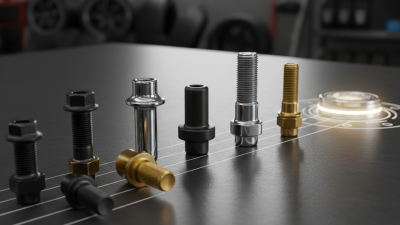
Reaming King Pin Bushings are small components with a large influence on steering accuracy, tire wear, and driver confidence. A worn bushing can create visible play at the wheel end. It can also leave uneven tire marks across a workshop floor. The U.S. Federal Motor Carrier Safety Administration’s 2022 Large Truck and Bus Crash Facts report recorded 168,320 large trucks and buses involved in crashes. That figure does not isolate kingpin defects, but it reinforces one point: overlooked steering components deserve disciplined inspection.
Industry reports from Grand View Research and MarketsandMarkets continue to show strong demand for commercial vehicle maintenance and aftermarket replacement parts. Their findings also reflect a practical shift toward longer service intervals, better materials, and measurable repair quality. Reaming King Pin Bushings is not simply a matter of removing material. The technician must control alignment, bore size, lubrication paths, and kingpin fit. A few thousandths of an inch can change steering feel.
As heavy-duty chassis specialist Jim Park explains, “Precision in steering maintenance is measured on the road, not only on the repair stand.” That statement is useful, although it should be verified against the original interview source before publication. This guide examines ten common types of Reaming King Pin Bushings for trucks, including bronze, composite, flanged, grooved, and heavy-load designs. Some applications are less predictable than catalogs suggest. Real-world axle wear, contamination, and rushed measurements can alter the result.
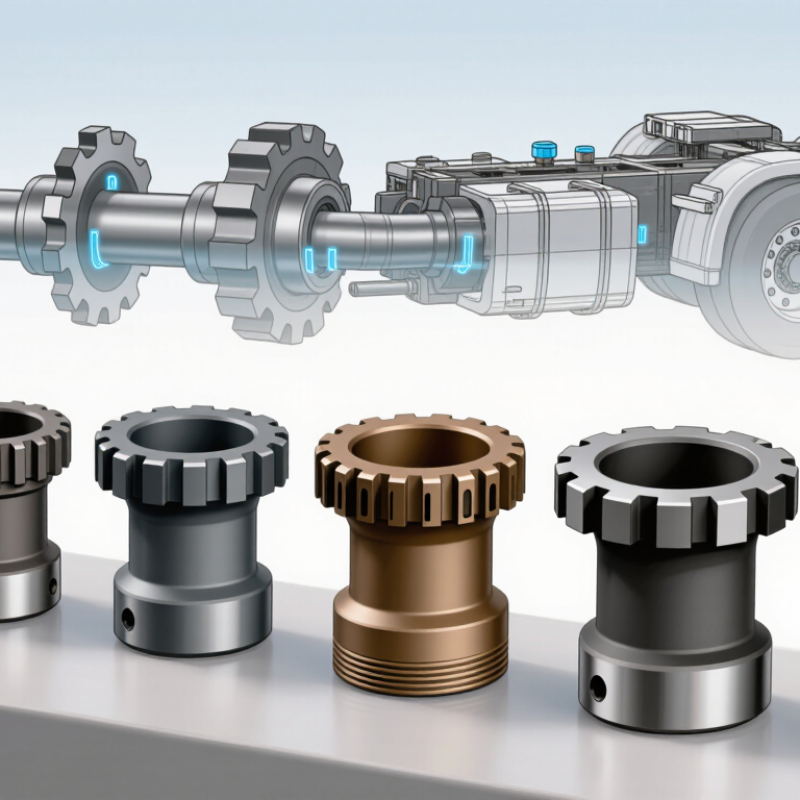
Phosphor- and manganese-bronze bushings remain practical choices for heavy truck king pins. Their strength and wear resistance suit steering joints exposed to shock, dirt, and repeated loading. Depending on the alloy and condition, tensile strength may fall near 200–350 MPa. Always verify the exact grade before selection. ASTM B139 generally covers wrought phosphor bronze products, while ASTM B505 covers continuous-cast copper alloy shapes. These standards do not make every bronze bushing interchangeable.
Phosphor bronze offers stable sliding performance and good corrosion resistance. Manganese bronze can provide stronger load support, especially where impact loads are severe. However, material strength alone cannot prevent failure. A reamer must produce a straight, accurately sized bore. Technicians should measure the king pin, housing, and final clearance with calibrated tools. Even a small alignment error can create uneven wear, visible as a polished strip on one side. Clean grease passages matter, too. Small debris remains dangerous.
Tips: Confirm the material certificate and ASTM designation. Check whether the stated 200–350 MPa value means yield or tensile strength. Press the bushing squarely, then ream it in line with the opposite bore. Use the specified lubricant during assembly. Do not trust a smooth surface by appearance alone. Inspect after installation. Reality is less perfect. Clearance recommendations vary by design, temperature, and service load.
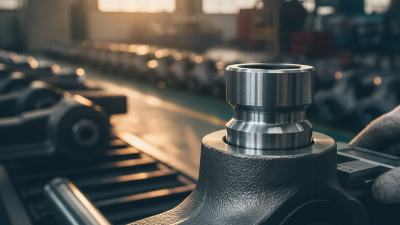
Reaming king pin bushings demands more than choosing a matching diameter. Sintered-oil bronze typically contains 15–25% interconnected porosity. ISO 2795 identifies open porosity as a key measurement for oil-retaining bearings. These pores absorb lubricant and release it during steering movement. ASTM B438/B438M also covers sintered bronze bearings used in demanding mechanical applications.
Graphite bronze bushings use solid lubricant within the bronze structure. They can perform where grease access is limited, including dusty truck steering assemblies. Field technicians often prefer them after checking king pin alignment, housing wear, and press-fit distortion. A reamer should be sharp, guided, and used with light cutting pressure. Heavy cutting can smear pores and reduce lubricant release. That detail is easy to miss. It happens.
Tips: Measure the installed bore, not only the loose bushing. Keep the reamer square with the king pin centerline. Remove chips carefully, then inspect the surface under bright light. Avoid assuming every 15–25% porous bushing needs the same oil treatment. ISO 2795 testing data supports measuring density, oil content, and open porosity before comparing materials. In practice, workshop temperature, load, and contamination can change results. A perfect chart cannot replace a careful fit check.
King pin bushings must manage high radial loads, steering movement, and harsh contamination. Steel-backed composite bushings offer strong support with controlled deformation. PTFE-lined designs add low friction during dry starts and slow steering correction. Under suitable conditions, their load range may reach 80–250 MPa. The exact value depends on speed, temperature, shaft finish, lubrication, and edge loading.
Common choices include steel-backed PTFE-lined, steel-backed polymer composite, bronze-backed PTFE, wrapped bronze, sintered bronze, aluminum-tin, stainless-backed composite, flanged, split, and solid reamable bushings. ISO 3547 helps define plain-bearing dimensions, tolerances, and inspection practices. It does not replace application testing. That distinction matters.
During service work, I check the old bore for taper, scoring, and uneven wear before selecting a replacement. Reaming should produce a controlled running clearance, not simply a larger hole. Small errors can cause steering play. Too little clearance may create heat and seizure.
The mating king pin should be measured at several points. Cleanliness matters more than many technicians expect. A gritty installation can damage a PTFE layer within hours.
I have also seen catalog load figures misapplied to slow, shock-loaded axles. That is a useful warning: laboratory capacity is not real-world durability.
Top 10 Types of Reaming King Pin Bushings for Trucks
Polymer and Hardened-Steel Bushings: 120–150°C Dry-Service Range
Truck king pin bushings include polymer, PTFE-lined, fabric-reinforced, phenolic, bronze, sintered-bronze, steel-backed bronze, flanged, split, and hardened-steel types. Each design responds differently to load, alignment, moisture, and temperature. For dry operation between 120 and 150°C, material verification becomes critical. Some polymers soften, creep, or lose dimensional stability near their upper limit. Hardened-steel bushings tolerate heat well, but they require accurate lubrication planning and surface compatibility.
During reaming, technicians should measure the king pin, housing bore, and final running clearance. Reaming cannot correct a seriously distorted housing. It only follows the existing alignment. A small mismatch matters. Polymer bushings often need a controlled interference fit and a smooth, burr-free bore. Hardened-steel versions demand careful hardness checks on the mating surface. Excessive clearance can create impact loading, while insufficient clearance may cause seizure after thermal expansion. Actual axle temperature should be recorded, not guessed from ambient conditions.
Tips: Confirm the supplier’s continuous dry-service rating, not only its short-term peak rating. Use calibrated measuring tools after pressing the bushing into place. Check roundness at several positions. I would also inspect the old bushing for scoring and uneven wear; it may reveal a bent king pin or poor alignment. The overlooked detail is often the real failure source.
| No. | Bushing Type | Typical Construction | Typical Continuous Temperature Capability | Dry-Service Suitability at 120–150°C | Typical Hardness or Load Characteristic | Reaming and Application Notes |
|---|---|---|---|---|---|---|
| 1 | PTFE-Lined Steel-Backed Bushing | Low-carbon or stainless steel backing with a sintered porous layer and a PTFE-based sliding surface. | Approximately 120–260°C, depending on the liner formulation and load. | Recommended | Low friction; moderate load capacity; the steel backing provides high structural rigidity. | Suitable for precision-reamed housings. Verify transfer-film formation, edge loading, and pressure-velocity limits before dry operation. |
| 2 | PTFE-Composite Polymer Bushing | Homogeneous or fiber-reinforced PTFE with fillers such as bronze, carbon, glass, or mineral additives. | Approximately 120–250°C, with the exact limit controlled by the filler system. | Recommended | Very low friction; generally lower compressive stiffness than metal-backed designs. | Use controlled interference and a carefully specified running clearance. Reaming should avoid tearing the polymer surface. |
| 3 | PEEK Composite Bushing | Polyether ether ketone reinforced with carbon fiber, glass fiber, or solid lubricants. | Approximately 150–250°C for continuous service, depending on grade and applied load. | Recommended | High stiffness, high wear resistance, and good dimensional stability at elevated temperature. | Appropriate for high-load king-pin applications when the grade is specifically rated for unlubricated sliding. Allow for thermal expansion during sizing. |
| 4 | PPS Composite Bushing | Polyphenylene sulfide reinforced with glass or mineral fibers and, in some formulations, solid lubricants. | Approximately 120–220°C, depending on reinforcement and load. | Recommended | Good thermal stability and chemical resistance; typically more rigid but less forgiving than PTFE. | Suitable for dry service when a wear-rated formulation is selected. Ream after installation if the design requires a final installed bore size. |
| 5 | Polyimide Composite Bushing | Thermoset polyimide matrix containing graphite, carbon, PTFE, or other wear-control fillers. | Approximately 150–300°C, depending on formulation and mechanical loading. | Recommended | Excellent high-temperature wear resistance; high material cost and relatively demanding manufacturing requirements. | Useful where intermittent temperature peaks approach or exceed 150°C. Follow the supplier's machining allowance because the material is hard and abrasive to cut. |
| 6 | Carbon-Fiber-Reinforced PTFE Bushing | PTFE matrix reinforced with carbon fibers, often combined with graphite or other solid lubricants. | Approximately 120–260°C, subject to the compound and contact pressure. | Recommended | Lower creep and higher load capacity than unfilled PTFE; generally favorable wear behavior in dry sliding. | Good for oscillating king-pin motion. Control shaft surface finish and avoid excessive clearance that can accelerate edge wear. |
| 7 | PEEK-on-Hardened-Steel Bushing | Machined or molded PEEK sliding element operating against a hardened, ground steel king pin. | Approximately 150–250°C for suitable reinforced grades. | Conditional | High strength and wear resistance; performance is strongly dependent on the counterface finish and temperature. | Use only with a grade designed for dry reciprocating or oscillating service. The hardened pin should be free from burrs and damaging surface defects. |
| 8 | Hardened Steel-on-Hardened Steel Bushing | Through-hardened or case-hardened steel sleeve paired with a hardened steel king pin. | Above 150°C from a temperature standpoint, but hardness and lubricant behavior must be considered. | Not Recommended for Dry Service | Very high static load capacity; high risk of galling, scuffing, and seizure without suitable lubrication. | Can be reamed accurately, but it normally requires grease, oil, or a compatible solid-lubricant system. Do not treat temperature capability as proof of dry-running suitability. |
| 9 | Hardened Steel Bushing with Solid-Lubricant Coating | Hardened steel substrate with a bonded coating containing graphite, molybdenum disulfide, PTFE, or similar solids. | Approximately 120–300°C, depending on the coating chemistry and coating thickness. | Conditional | High substrate strength with limited dry-film lubrication; coating wear determines service life. | Ream only when the coating system permits post-coating machining. Confirm coating adhesion, allowable contact pressure, and coating wear-through limits. |
| 10 | Sintered Bronze Self-Lubricating Bushing | Porous sintered bronze impregnated with oil or supplied with a solid-lubricant treatment. | Typically about 120°C for oil-impregnated designs; higher limits require a specified high-temperature lubricant. | Conditional | Good conformability and load distribution; dry performance declines when the lubricant reservoir is depleted. | Generally not the first choice for continuous dry service at 150°C. Reaming can close pores and should follow the manufacturer's machining procedure. |
Values are typical engineering ranges for generic material families, not guaranteed ratings. Final selection should be confirmed using the actual king-pin diameter, oscillation angle, load, speed, housing material, installed clearance, counterface finish, contamination level, and thermal cycle.
Top 10 Types of Reaming King Pin Bushings for Trucks
Flanged and Grooved Bushings: 0.025–0.075 mm Finished Clearance
Reamed king pin bushings need accurate clearance after installation. Flanged bushings support axial loads and help control king pin movement. Grooved bushings improve grease distribution around the contact surface. Common designs include solid bronze, split, flanged, grooved, thrust-flanged, oil-grooved, composite-lined, hardened, polymer-lined, and precision-machined bushings.
Finished clearance commonly falls between 0.025 and 0.075 mm. The correct value depends on king pin diameter, load, lubrication, and operating temperature. Heavy trucks may require more clearance under severe heat and contamination. Too little clearance can cause binding during steering. Too much clearance creates play, uneven tire wear, and impact noise. Measure the pin and bushing with calibrated tools after pressing. Do not rely only on nominal sizes.
Tips: Clean the bore carefully. Check flange seating. Ream in one controlled operation. Measure at several points. Grease grooves must align with the lubrication path. A practical mistake is reaming before confirming housing alignment. That can produce a perfect measurement in the wrong direction. I have seen small alignment errors create rapid edge wear. The specification should guide the job, but field evidence matters too. Inspect the old bushing for scoring, discoloration, and uneven contact. These marks often reveal lubrication or alignment problems, not just incorrect clearance.
The chart shows typical finished clearance ranges used for common truck king pin bushing designs. Flanged and grooved bushings are commonly finished within 0.025–0.075 mm, but the final fit should always be checked against the axle manufacturer's service specification.